Tuesday, April 23, 2013

A Child's Song - The Story of Jeremiah Gibbs


Sometimes a song is just a simple expression of the heart. 


Sometimes the singer touches us with words that ring true and reach the very core of what’s important in life. Sometimes the most perfect song comes from a child or the mother who loves him. This is the blessing a singer can bestow upon the world.


One Such Singer


Jeremiah Gibbs is a vibrant, funny three-year-old boy who was born with T.A.R Syndrome. For him, this means that he was born without arms, and cannot walk normally. Despite his physical difficulties, he is a wonderful, exuberant, and innovative child.

T.A.R. is short for Thrombocytopenia Absent Radius Syndrome. What it means in layman terms is that Jeremiah requires occasional blood platelet transfusions and has fused kidneys. He has no arms and has multiple leg abnormalities. And yet, Jeremiah has found innovative ways to handle the daily tasks most of us take for granted, such as eating, brushing his teeth, getting around and interacting with his preschool friends. Jeremiah has made some amazing adaptations, but he cannot walk which makes getting around outside and keeping up with other children very difficult.


The Power of Music


Jeremiah loves music and loves to sing. This past weekend, I attended a fundraiser for Jeremiah in Tacoma, WA. to help raise money for a service dog, a power chair and a van that will be equipped to handle the power chair. These are basic things Jeremiah will need to help him function and help to enrich his life.

The fundraiser was full of music. Bands and individuals offering their gifts to help raise funds and provide inspiration. Miss Wheel Chair Washington, Jenny Adams, was in attendance and particularly inspirational in her musical performances. Click on the link to see the video.

But perhaps the highlight of the evening was Jeremiah himself and his rendition of “Now I Man My ABC’s”. Following his performance, his mother, Taylor, sat Jeremiah up on a stool and sang “Blackbird” to him. Now, I am a tainted, old performer, but when Taylor sang the simple words, “take these broken wings and learn to fly,” with Jeremiah listening on, I was moved. A simple song – a young mother's commitment - a poignant moment. That’s the power of music and the human voice.

YOU CAN HELP


You can keep the song going and contribute to the ongoing welfare of young Jeremiah Gibbs by visiting http://www.gofundme.com/wwwsummitdogsorg. Thank you.

Wednesday, April 17, 2013

The Vibrant Cabaret Today!


An Interview with Cabaret Producer, Clifford Bell of Hollywood. 

Clifford Bell and performer, Katey Sagal

Performers and audiences alike are rediscovering the vibrant Cabaret experience, thanks in no small part to the inexhaustible efforts of Producer, Clifford Bell of Cabarabia. Join us for a fascinating interview with Mr. Bell on the state of health of the Cabaret today!


SNB - How would you define the “cabaret” these days?

CB - I have a very expansive definition of "cabaret". Traditionally, the cabaret is defined as a live performance in an intimate setting; a small room, under 100 seats generally where the audience is close to the stage.  In many people's minds, this sort of "cabaret" is usually show tune-ish or "Great American Songbook" - Broadway Revues or Gershwin/Cole Porter type stuff. However through the years, the definition has evolved to have much more contemporary definitions - political satires, stand up comedy, story telling, acoustic rock - all have a place in how I define modern "cabaret".

SNB - When did you form Cabarabia?              

CB - I've been doing what I do, pretty much for over thirty years.  I grew up in a house that introduced me to Broadway Music and standards (The Great American Songbook) and I naturally gravitated to doing live shows in small venues. I was in the room to see so many of the greats when they were first getting rolling - early Bette Midler, Bernadette Peters, Roseanne, Sandra Bernhard, Peter Allen, etc. Cabaret clubs were where a lot of the greats got their start. 

Somewhere along the way, a friend said to me, "You're like Lawrence of Cabarabia", and a concept was born. From that point on, I started to use the term "Cabarabia" to describe the lifestyle and "universe" of being a citizen of the nightclub world. In the late 90's, I actually got the DBA and made it my business.

SNB - Can you describe your mission?

CB - I've always been most interested in giving new talent practical experience.  As a person who went to college to study Musical Theater, I always felt the biggest flaw of the academic environment was not being enough like the market place. As a producer in the cabaret world, I try to create a melting pot where accomplished veterans can share the stage with newcomers. That is always the underlying focus of my work.


SNB - What is your position with Cabarabia?

CB - I'm it, Baby!   It's all me. It's just an umbrella for my activities and interests.
 
SNB - When did you first become interested in the Cabaret venue?

CB - I guess when I was in college studying Musical Theater.  I always felt that I wasn't a traditional enough type to get the great roles in book shows, but the cabaret stage is the performer’s canvas. They are the star of the show. Whatever the show is, they are the leading man or woman by virtue of the nature of the medium.

SNB - What appeals to you about producing Cabaret performances?

CB - To me, after all this time, what I do is the ultimately most satisfying thing I know about.  It is always creative and always stimulating. My goal is to define someone at their most likable, most interesting and build a frame around it. In some ways it's kind of a mystical talent, but in some ways it's just knack I have for being able to find the right "context" to present people.

SNB - Do you have a few favorite cabarets in the US today?

CB - Tragically, the big ones in the major cities are closing like wild fire. In the last year, the most prestigious venues in New York - The Oak Room at the Algonquin and Feinstein's at Loews Regency - both suddenly closed. The Rrazz Room in San Francisco just closed. All of these places will reinvent themselves, but it was a hard year for the high-end cabaret rooms.

SNB - Do you see a growing popularity in the cabaret venue these days?

CB - Absolutely.  I think the future of cabaret is that young people are discovering it as a way to be seen.  All the TV talent shows create these gargantuan, vocally histrionic performances, but the truth is, the place you get good, the place you get known, the place you get discovered is still in the small rooms playing in front of real people who care.

SNB - You are a performer. What is it about performing in an intimate performance space that you enjoy?

CB - I've always had a love/hate relationship with performing. I was a nervous performer. In my early career as a singer, I got to the point where I needed an 8 piece band and a lot of distance to be doing something that made me feel courageous enough to be onstage. I always loved singing but I was deeply shy and it was unnatural to be onstage.

Sunday, April 7, 2013

How Old is Too Old to Benefit from Voice Lessons?


“I love to sing, but I think I’m too old to improve my voice. Can I still benefit from voice lessons?”


Absolutely. One important part of vocal training – perhaps the most important part – is to keep the voice flexible, agile and healthy as our bodies continue to mature. But don't underestimate your ability, as an adult, to improve and develop your instrument. Proper technique and good vocal habits can make a huge difference in the quality of one's singing voice at ANY age!

When Does the Voice Reach Maturity?


Singing voices mature at different rates. Women’s voices start to mature at around age eighteen, with lower, rich tonal qualities developing for years after that. Men’s voices mature much later with more beautiful richness evolving over the years.

When I was a young singer, one of the contest experiences I had was singing for The Metropolitan Opera Auditions which is a national vocal contest designed to educate and encourage young, talented singers interested in opera. It was an exciting competition and a wonderful performance opportunity. These prestigious auditions are still held every year throughout the country. The main prize is the opportunity to sing with The Metropolitan Opera Company. Singers who compete in The Metropolitan Opera Auditions must be between the ages of 20-30 - not exactly young singers, though many of us would love to be that age again. My point is, for this prestigious competition to find and consider talented young classical singers, the participant’s voices have to have started to mature and that doesn't happen until at least the 20's. Trying to force maturity in a voice prior to natural maturity can be detrimental.

Keep Your Voice Healthy Throughout Your Life.

From the time you begin to sing, through the age that your voice is fully mature, it is important to keep the voice healthy. Without good singing habits, you can damage your vocal chords and limit your lifelong potential. It doesn’t matter at what age we get serious about vocal health – as long as we get serious about it. Keeping the voice in good condition, whether for singing or for the all-important task of speaking, will serve you well throughout your life and in this way, good vocal training can help.

My mother, Betty Peterson, was a professional singer. She sang with the Seattle Opera Company many years ago and was a soloist with symphonies around the Pacific Northwest. She had a beautiful lyric soprano voice and one of my great joys while growing up was singing duets with her on a regular basis.  When she entered her early sixties, she began to have difficulty with singing. Her voice would crack and she was losing her agility. She could no longer rely on the smooth, effortless vocal production she once had. Eventually, even her speaking voice was raspy and it could be difficult to hear and understand her. She had several surgeries to enable her to speak louder but she never fully recovered her voice. I could see through my mother’s experience how important it is to maintain vocal agility in order to simply communicate in daily life.

You Can Regain Vocal Agility and Range Through Effective Training.

I have worked with many adult students who have regained the flexibility of their voices through vocal training. If the vocal range is not exercised, it can tend to dwindle as any physical ability will. But, I have seen adult singers increase and reclaim their vocal ranges  with regular, gentle exercises and singing. By increasing the agility and flexibility of the vocal chords  adult singers can improve and continue to experience the joy that comes with singing for many years to come. That joy is yours, regardless of age or ability. 

Having good vocal habits, using proper breath support and a relaxed singing approach, will help you reach your vocal potential and maintain the health of your voice throughout your life. Without some guidance on supporting the voice and producing the voice without strain, it is possible to lose some of our vocal ability in our senior years. See more resources for supporting and regaining the voice at Sing-Naturally.com.

One last note – 

One of the primary voice teachers from my youth, William Chapman of Los Angeles (along with his wonderful wife, Irene), was still singing beautifully and professionally well into his 80s. His singing career was wondrous and varied; from the New York City Opera and the Met to Broadway. He believed that singers should continue to sing well as long as they could breathe and his life was a testimony to that. So, I can say with certainty that it is never too late to enjoy the many benefits of voice lessons.

William Chapman, died almost a year ago. If you click on his name above, you will follow a link to his rich biography on Wikipedia. He was an amazing performer with a beautifully rich baritone voice. Bill was an encouraging and supportive teacher for hundreds of vocal students and he had a strong developmental influence on me and my teaching. He performed professionally in The King and I, as the King of Siam, 3800 times – second only to Yul Brenner who performed the part 4200 times.

Saturday, March 30, 2013

New Acting Resource Just Released!


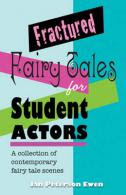
Fractured Fairy Tales for Student Actors: A Collection of Contemporary Fairy Tale Scenes

A New Book by Jan Peterson Ewen

Fractured Fairy Tales for Student Actors; A Collection of Contemporary Fairy Tale Scenes
Fractured Favorites!
Acting teachers are always looking for good new material to help their students move forward in their understanding of acting techniques and to have a great time doing so. I know that, as an acting teacher myself, I am always looking for workable resources. That’s what inspired me to write Fractured Fairy Tales for Student Actors: A Collection of Contemporary Fairy Tale Scenes This book has just been released by Meriwether Publishing, which is the leading source for the highest quality theatre textbooks, drama books, theater texts, drama textbooks, and theatre DVDs available today.


I have been directing and teaching acting for many years. I love working with both kids and adults in the acting process. In the past couple years, I was in need of short, appropriate scenes for my acting students, ages 8 – 16. Preferably comedy, because I simply love comedy and so do my students. So, I started writing scenes that would be fun to perform and teach basic acting principles at the same time. I was surprised to find that my adult acting class loved the fractured scenes as much as the kid’s classes did.

What makes this collection of acting scenes user-friendly and valuable?

Familiar Characters. Most everyone has an idea what Miss Muffet would be like, or Bo Peep and Mary from “Little Lamb” fame. What about Peter, Peter the pumpkin eater or Jack and Edith Sprat who only eat lean or fat? We may not know a lot about them, but they are somehow familiar, none the less. That makes for easy access into character development.

Scenes Based on the Original Stories – Pretty much. Contemporizing the original stories and expanding the conflict makes for some fun acting situations.  Students will quickly relate to the fractured scenes and throw themselves into the situations.

Natural Dialogue. Creating dialogue that flows easily and sets up the motivations of each character helps the actors discover nuance and levels of emotion. Actors can easily get away from “reading” the script and become the characters.

Built in Stage Technique Practice. Each scene in this collection has some theatrical device with which actors become familiar. Perhaps something has just happened offstage and the actors must respond accordingly throughout the scene. Perhaps there is an invisible element on stage that the actors experience as real. Maybe they will be faced with an unfolding mystery or have to cover up their true feelings. A variety of theatrical possibilities face each actor in these scenes.

Just Good, Clean Fun. Aside from all the actors will learn from performing these scenes, they will definitely have a lot of fun - regardless of age!

So, I hope you'll take a look at my new book, Fractured Fairy Tales for Student Actors. I know it will be as valuable a resource for you as it has been for my students and me. Then share your experiences with us on the Sing-Naturally Blog. We'd love to hear from you!

Make sure you check out the Meriwether Publishing Website for more great drama resources.


Wednesday, March 27, 2013

How Young Is Too Young to Start Singing Lessons?


"My child shows a lot of musical talent. Should I start him on voice lessons?"


• First – all children are different. Of course, most parents think their child is exceptional for their age. I certainly thought my young children were musical geniuses. But that doesn’t mean your child is ready for actual private vocal instruction.

• Second – all children benefit from learning good singing habits from the beginning and most children love music and love to sing. This should be encouraged through many experiences.

• Third – formal instruction is probably not necessary for the majority of young children and can be a challenge for young attention spans, leading to discouragement. 

Let’s consider these points. Yes, your child is exceptional. Your child loves to sing and picks up songs so quickly that you are amazed. That is awesome! Most children take to music like ducks take to water. But, as a professional voice teacher, I tend to wince when an eight year old (or younger) is signed up for voice lessons with me. For most children, voice lessons are definitely overkill.

My primary focus with a young child is different than my focus with a youth or adult. With a young child, my goal is to open up a world of exciting possibilities that will last a lifetime, but formal voice lessons are not necessary for this step. There are many ways a child can discover the joy of music and performing.

FIRST THINGS FIRST. The very first thing a parent can do for their child is to take them to see and experience live performances. Let your child see the local ballet, concerts and theater. If you are budget-minded, local productions offer a great alternative to more expensive professional shows and your child will love them. Watch quality shows and performances on TV with your children. Introduce them to every Musical you can find (appropriate for kids, of course).

In other words, educate them in the Arts! Then when they begin to study privately, they will have a better idea what they are aiming for and know where our vast repertoire of music comes from.

Performing Arts are incredibly beneficial to children. Whether it’s acting, singing or dance, children

Tuesday, March 26, 2013

Welcome to the Sing-Naturally Blog!

One of the basic joys in life is to sing your heart out. I didn't realize that until, as a voice teacher, I spent time working with people who struggled to do so. Having grown up in a musical family, singing seemed as natural to me as talking. And it is unless, for some reason or other, you have become petrified to put your voice out there into the world. In that case, the process of singing becomes arduous and even painful.

Let's talk about singing and performing. Not in a way that only addresses the professional, but in a way that addresses and speaks to all of us. All of us who long to create beautiful music and be a part of the song. Everyone who has a heart for singing is welcome.

In this blog, I will talk about the many aspects of learning to sing, act and perform at your level. Knowing the basics will give you a world of confidence when it comes to your own, unique talent. Whether you are just getting up the courage to step onstage or you're looking to take that next step, I want to encourage you in your journey and help you sing your heart out!

So, sign up to receive the rss feed and let's get started.

Visit Sing-Naturally.com for more information.